Reviewing Embroidery Clipart for Personalized Gifts
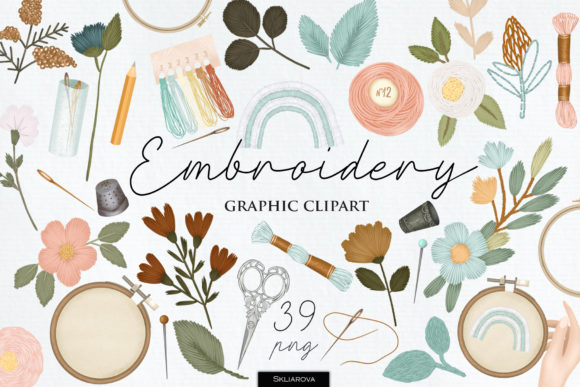
As a professional embroidery designer who has spent years turning digital concepts into tangible heirlooms, I know that the quality of your source material is just as critical as the stitching itself. Recently, I put Embroidery Clipart to the test with a very specific goal in mind: creating high-end personalized gifts for a boutique shop. This collection promises 39 separated PNG files with transparent backgrounds, sized at approximately 3000x3000 pixels. But does this digital asset translate into a beautiful finished product on a baby blanket or a wedding keepsake? After running several tests, here is my honest review from the hoop.
The First Impression: Charm and Detail
When you first open a folder of Embroidery Clipart, the mood is immediate. These illustrations feel warm, inviting, and distinctly handmade. They possess a charm that avoids being overly rigid or sterile, which is exactly what customers look for when they want something special. The detail level is impressive for a set of graphics intended for commercial use. Each element appears crisp against the transparent background, suggesting that the original vector work was done with precision.
The emotional appeal is strong. Whether you are designing for a nursery, a bridal shower, or a rustic kitchen, these designs strike a balance between sweet and elegant. They do not feel like generic clip art; instead, they feel like sketches brought to life by an artist's hand. For an Etsy seller or a small business owner, this distinction is vital. Customers buy into the story behind the item, and the visual narrative provided by Embroidery Clipart sets the stage for a meaningful purchase.
Real-World Application: From Screen to Stitch
I decided to simulate a real customer order scenario to see how these graphics would perform. Imagine a client requesting a custom embroidered towel for a housewarming gift. Using the Embroidery Clipart elements, I placed a delicate floral motif near the hem. The separation of the PNG files meant I could easily isolate specific petals or leaves to adjust their placement without cluttering the design space.
This versatility extends far beyond towels. For baby embroidery projects, such as a soft crib sheet or a plush blanket, the clean lines of these graphics ensure that the final result looks polished rather than messy. I also tested them on a pillow cover for a wedding gift. The romantic aesthetic of the illustrations complemented the fabric texture perfectly, elevating the perceived value of the item. When a buyer sees a photo of a pillow cover adorned with such intricate details, they are more likely to trust the quality of the craftsmanship.
For custom tote bags or aprons, the 300 dpi resolution ensures that even when printed on mockups for marketing, the image remains sharp. This is crucial for Etsy sellers and small shop products where the online image is often the only way a customer can judge the quality before buying. The ability to reduce the size of these files while maintaining clarity means they work well for smaller items like keychains or patches, expanding the range of products you can offer.
Where to Exercise Caution
While Embroidery Clipart is versatile, every experienced designer knows that not every design fits every surface. There are specific scenarios where you must be careful. If the illustration contains extremely small lettering or incredibly delicate, hairline details, it may get lost when stitched on thick terry cloth or textured fabrics. On a heavy embroidered towel, fine lines might blend together, losing the definition seen in the digital file.
Stretchy fabrics, such as those used for baby clothes or fitted onesies, present another challenge. Designs that rely on precise geometric spacing can distort if the stabilizer choice is incorrect. Similarly, curved surfaces like hats or rounded mugs require a design that can accommodate the curvature without bunching. Dark fabrics can sometimes swallow up light-colored threads unless the underlay and stitch density are adjusted properly. Always remember that a digital embroidery file is a guide, not a guarantee, and the physical medium will always alter the final look slightly.
Boosting Giftability and Customer Trust
The right graphics can transform a simple item into a cherished keepsake. When you use high-quality assets like Embroidery Clipart, you signal to the customer that you care about the details. This attention to detail builds customer trust. A beautifully designed wedding gift or a family keepsake creates an emotional connection that goes beyond the utility of the object.
In terms of product photography, having a clear, high-resolution source allows you to create stunning printable mockups. You can show potential buyers exactly how the design will look on a blanket embroidery project or a kitchen towel before they even commit to the order. This transparency reduces returns and increases engagement because the customer feels confident in what they are buying. The perceived value of a handmade product rises significantly when the design elements are sophisticated and well-executed.
Practical Notes for the Maker
Before you start stitching up a batch of orders for your craft fair or online store, there are essential technical steps to take. Even though the Embroidery Clipart comes in high-quality PNGs, you must convert them carefully for your machine. I strongly advise testing on scrap fabric first to check thread color contrast. Sometimes a color that looks vibrant on screen appears muted on cotton.
Confirm your hoop size relative to the design dimensions. The files are listed at 3000x3000 pixels, which is substantial, so ensure your digitizing software handles the scale correctly. Review the stitch density; if the original illustration is dense, you may need to adjust the fill settings to prevent puckering, especially on lighter fabrics. Using proper stabilizer is non-negotiable for maintaining the shape of the design throughout the washing process.
Finally, compare your light and dark fabric mockups side-by-side. Look closely at small details after stitching to ensure no gaps have appeared. And perhaps most importantly, confirm the commercial licensing terms before selling finished products. Ensure you have the right to use these Illustrations and Graphics for resale. With the right preparation, Embroidery Clipart can be the foundation for a thriving line of personalized gifts that customers will love for years to come.